Search DC to White Light

Showing posts with label broadcast. Show all posts

Wednesday, May 24, 2017

Distribution without a Network? Be your OWN Network! Here’s the Secret.


Content.  Easy Access.  Promotion.  No burying the lede here. 
 
I wrote about “channels” before.  It’s a word that’s outlived its time, unless you’re trying to talk to your great, great grandmother.  Now let’s discuss “networks.”  It’s funny.  Everyone wants to be one.  No one wants to be part of one.  That sort of makes sense…what they’re really saying is that they want to control the distribution of their content and don’t want to relinquish control of it to others.
 
It’s consistent with the evolution of media distribution from bicycling 16mm film around to local stations to “ordering” of content directly from the producer over the web.  That early method worked but there really was no control over the airing except the trust built into the contract.  Even so, a show could get multiple runs, be copied, or get lost in the rotation.  Today anyone with uncensored Internet can watch just about anything when they want.  It’s truly “what you want when you want it” (WYWWYWI or WhyWhyWhy.)
 
Which begs the question, “Why?”  Why a network?  Well, the agencies and the existing networks will argue,
  • Networks are the largest aggregator of eyeballs
  • They are efficient
  • They are easily measured (accurately? Well, that’s another story)
  • They are cheap - goes with efficient
  • People are used to networks (whatever that means)
  • They’re easy to buy (they’ll never tell you that but think about it – about buying time in a few networks rather than tens of thousands of individual pieces of content.  What else would you expect from an agency!  Ask me how I know.  As an early proponent of cable, I got thrown out of my share of offices for suggesting taking positions in cable programming.)
I would counter that with
  • People feel their own time is valuable.  Patience went west when the remote control came on the scene.
  • It’s become a world of instant gratification.  The WYWWYWI mindset applies to entertainment as well as everything else.  People want it now.
  • Viewers are fickle.  The era of someone tuning a specific network and spending their entire night there is gone.  If the show’s bad, they’re outta here.  (Remember hammocking?)  I see broadcast networks still having at it, hoping the lead-in will help sampling of a new show.  I usually see it in a promo as I’m on my way to the Roku.
  • Measured?  You want measured?  I can find out who, when, how long…with at least as much reliability as network numbers
  • Sure, largest aggregators…but really only on big, live events.  And (you heard it here) when the NFL gets a little more fortitude, they’ll put the Super Bowl on NFL Network as a $50 PPV.  BTW – that won’t be a network.  It’ll be a direct link to their servers.
  • Repeating myself from a statement made years ago, No one cares what kind of car brings the pizza.  It’s the pizza – the content – they want.  And just like that pizza, they want it now.
 
By now, you’re screaming back at the screen, “OK, so what’s the secret?” Well, I told you right off.  The secret is you don’t need to be a network. There it is. You surely don’t want to yield control to one but you don’t need to be one, either.  There are 3 simple steps to distribution
 
  1. Create content people want
  2. Make it easy to access it
  3. Tell people about it, including where it is
 
I’m wondering if you’re laughing, maybe shouting, “Duh!” or breaking your knuckles trying to stick your arm into the monitor to grab my neck (you can’t, I’m back about 3 feet from this thing) but, it’s that simple.
 
The devil is in the details, of course.  But he ain’t that mean.
 
First, as far as content people want, you don’t have to appeal to the whole world.  If you want to offer fishing videos, there are plenty of fisherpeople you can offer your wares to.  In fact there are plenty of folks in the “I just want to fish for bass” school (pun intended) to whom some of your content should appeal.
 
Second, make it easy to access.  Devil’s back and he/she thinks he/she’s tightening the screws.  Thing is he/she’s easily defeated here, too, though way too many locations make it so difficult that it isn’t worth it. It’s just that if you have the content, make sure that people can get to it.

  • Yeah, your marketing and advertising person said you can put the program 3 clicks, 2 prerolls and an overlay away and people will still come to it.  Is that your guy?  If so, pop him/her with a 2x4.  Wanna cut your views in half, quarter or even by 90 percent?  Put up those barriers.  Go ahead try it.  Or try it with a restaurant – put some “Police Line” barricades in front of the door or do a chalk outline of a body on the sidewalk in front.  Make the door really hard to open.  Lemme know how it works out with customer traffic.
  • Get the video playing in one click.  You can add overlays – heck, networks have pretty much abandoned the lower third of the screen anyway – or even some complete commercial interruptions but get viewers to the content NOW.
  • Don’t make anyone wade through a bad search engine to find their content.  If you have a few pieces, put them right there on the home page.  Yep.  Thumbnail, description and direct link.  If you have a lot, consider using subdomains to divide your content.  Your prospects go directly to the subdomain and then to the content.  Special bonus:  On the landing page of the subdomain, you can promote all sorts of other content you have.
  • Don’t choose some convoluted player.  HTML5 has its own and there are others which can be used easily without forcing the prospective visitor to download one.  A.) Given today’s malware, you’ll lose prospective viewers to the paranoia of a cryptolocker, and, B.) It’s that WYWWYWI thing.  If they have to go through the trouble of downloading a player, they’ll go on to another site.  And be careful with Flash.  How many times do you get angry because you get the, “You’re hosed.  Your version of FLASH cannot play this video.  Please click here for the nightmare of downloading and installing a new version, including having to close this very browser?”
 
So that’s the second point.  Now, number 3.  If you don’t tell the world where your great content is, nobody knows about it.  This is the only place where current networks have an edge.  They can cross promote including full promos and lower-third supers, the ones we love to hate.  But, today, even that isn’t enough.  Some of you may remember doing specials and getting a guarantee of 125 or 150 GRPs on air promotion for it.  But back then, that meant 10 to 20 promos (yeah some were voice over crawl but the promos were there).  Today, it would have to be, well, maybe a hundred or more.  And, as always with networks, you don’t know who you’re really getting.
 
But you can get around that with your own promotion.  Just stop and think how you can reach prospects.  This is Advertising 101, OK?

  • You can buy time/space elsewhere.  If you do and you don’t link that directly back to your promoted content, you’re wasting a lot of money.  By “directly,” I mean they click and the content starts playing.
    • “Buying” can be in the form of cross promotion.  You promote other content on your site and those folks promote content on yours.
    • “Buying” can also mean trading.  You can put ads/promos on your advertisers’ sites.  They help drive people to your content where they see ads for the advertiser.
  • Use public relations.  Get PR out there about your site, what you’re doing, what the content is, and, include the link.
  • Do interviews, make calls.  “Oh yeah? Where?”  You’d be surprised how many people will take your calls/emails and follow up with you.  Putting it kindly, there are plenty of lazy reporters out there who will schedule you for an interview or will take your talking points and build a story.  Saves them work.
  • Spend some money.  If you don’t have a promotion budget, set one up.  It’s all the rage.  If your content really is good, the expense will be small to get it found.  If you do it right, you can turn that promotional investment into a lot of visitors.  And if they return or tell others, well, you know that story.  I can’t go through determining where or how because it varies with content.  But if you don’t know who your target is, please, figure that out first.  From there, you can get to the right promotional places.
 
Finally, direct distribution means no intermediary.  Your viewer sees what you want them to see and when they want it.  It’s the ultimate cord cut.  No cable, no antenna needed.  A good web connection and viewers are off to the races – if that’s what they want to watch.  And if you have the content, make it easily accessible, and make sure to tell the world it’s there, you’re going to be part of their viewing mix.

Tuesday, December 6, 2016

Broadcasters and Streaming: We Get it. Or Do We?

Many broadcasters have gotten religion about ways of streaming their product.  They understand that there are two additional groups of users out there – those who want to watch or listen to programming as it’s broadcast but can’t access a receiver, and those who would prefer to watch or listen to that same content at a later time.

They have that understanding.  Cool.  But it’s how they address it that’s really missing the mark.

Courtesy,
Jay Ward Productions
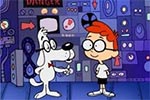
Sherman, set the WABAC Machine for 1930.  Let’s go visit the Galvin Brothers1 as they place a radio in a car.  I selected that point because the auto radio presented a special problem…selecting a station while driving.  Tuning up and down the band – such that it was under the Federal Radio Commission – was done with peril.  Dodging ruts and rocks while spinning a dial to find a station wasn’t easy.

So we made it easier.  By then Major Armstrong2 had invented the superheterodyne process so listeners didn’t have to tune multiple stages.  That, alone, made radio ready for home.  But for the car:  presets.  Push a button and get to a preset frequency.  One could listen while on the road.  So what’s the big deal?  We made it easier for someone to listen to our product.

Sherman!  Get in the machine.  We’re going back to 2016.  We have AM and FM in cars.  We have Wi-Fi, WiMAX, even Bluetooth to get from our phones to the dash.  And we have buttons…myriad buttons.  We have them at home, too.  I’m convinced that many of them don’t even do anything…they’re just there.

Well with all of that, you’d think the idea would be the same as a paragraph ago…make it easier to listen/watch. Yet broadcasters are missing the boat.  A combination of poor use of technology and overzealous marketing is killing streaming.

Weblands Archive
Do you spend a lot of time listening to broadcast streams online?  I mean, do you spend a lot of time listening – after you join their club, give them a significant amount of information, including your location, then reload the page because after you clicked “Submit” the page hung or you were sent back to the site’s home page.  Or maybe you hit “Back” and got the old “For [browser} to reload this page, it needs to resend information.  Do you want to do that?”  You click “Yes” and you get the page but your info is gone.

More often, you’re faced with a wall trying to keep you out.  Like opening a restaurant and putting an oil drum in front of the door.  Seriously.  You’re asking visitors to come in; use your product.  Sure, if you’re a car dealer and you want them to take your latest SUV for a test drive, demand a driver’s license, thumbprint, picture and saliva sample (I cleaned that one up).  But we want people to come in, like what they see or hear and stick around.  Why the heck put a bar on the door.

On other sites, you get the impression that a wunderkind told management, “If we put the stream behind 5 clicks, think of all the extra impressions we get along the way.”  Really?  That’s good business?  It is if you check your analytics and see that almost all the folks heading for a stream actually make it through all the clicks.  If not, you might as well make your stream the last frame in a Taboola list of 25 celebrities who never learned how to tie their shoes.

Aha!  I got in.  Now we’re cruising.  Well, maybe.  If you limit your streams and people can’t get in, they probably won’t come back, especially if you’re offering syndicated programming.  You have to have a high enough number of concurrent slots available.  I’ve seen it.  You log out and can’t get back in.  I’ve been there – on the wrong end – as prospects called saying they couldn’t get the stream.  Not good PR.

OK.  You got in.  Suddenly there’s the dreaded preroll.  This has gone from :05 to :10 to “I don’t care how long it is, I sold the preroll to 10 advertisers so you run ‘em all.”  A few enlightened streamers offer visitors the ability to skip ads they’re not interested in.  Many broadcasters don’t.  Heck, they’re still scratching their heads of DVR zapping.

Let me reiterate:  you have to make it easy to get to your stream.  Do 2 :05s or a :10 and see how it works.  Look at the numbers.  How many stick around, how many leave.  You can A/B this with two links.  Alternate them so that half the visitors get, say, a :10 a :30 and another :10 preroll.  Then give the other half just a :10.  Then just look at the stats.  The revenue will probably fit along a bell curve – no preroll, no money, little bit of preroll, little bit of money, etc. all the way to lots of preroll, no money. 

Also, think about overlays.  Viewers will tolerate them if they don’t get in the way of important information.  I mean, on broadcast, we’ve already given up the lower third of the screen to promotion.  Sadly, people are used to it…used to a bright animated lower-third wiping its way across the screen during a dark stakeout.

Then, consider the real estate of the entire page.  But do so within the context of all the possible devices you’re serving.  If you’re distributing to multiple platforms, you can deal with each differently.  If you’re not, you may want to consider adding additional formats.

We’re done, right?  Oh, no, no, no, no. How about the stream itself.  Why do broadcasters, of all stream providers, seem to gravitate to lousy standards.  Part of it is cost.  Maybe we/they don’t want to continually upgrade.  Or they don’t want to pay for bandwidth.  Maybe it’s a training issue.  That shouldn’t be the case.

Remember the Adobe Flash wars with Apple and Android?  I will tell you that it made streamers miserable.  It also pushed us toward .mp3, .mp4, even .wmv and .wma.  During the evolution, a lot of prospective viewers and listeners came, saw, and, unfortunately, left.  We’re starting to get them back.  But now we have to keep them.  How?  Quality streams and minimal glitches that are playable on the maximum number of devices possible.  Nirvana.  Utopia.  Impossible.  But that has to be the goal.  We still have to make it work before we can sell it correctly.

Beyond live streaming, what about podcasts.  Well, I’m going to save some of that for the future.  But on a basic level, what are you offering and how do viewers/listeners get there?  Putting up those oil drums again?  Really!  If you promote them on the home page, link right to them.  Yes, have an aggregate page too, where you offer them all.  And you can insert commercials judiciously.

But how do I figure out who’s coming?  There’s an old survey adage – never ask a question in a survey that you can get the answer to elsewhere.  If someone is masking their IP address and you can’t see where they’re coming from, do you think they’re going to tell you on your club page?  You do?  Well, don’t.  There are many ways of finding out where someone is coming from.  Your visitors might not think so but there are. 

So, bottom line, let’s clean up our act.  Get a good compression scheme, pay for enough slots, and get your prospective visitor to the content as quickly as possible, consistent with making a buck, knowing that if in increase the advertising, you may only make half a buck.

1 If you don’t recognize the name do a little digging.  Won’t take more than a click or two for your eyebrows to go up.  Hint:  Their products are still alive and well.  Uh, sorta well.

2 That’s right.  Major Edwin Armstrong, inventor of FM has plenty more creations to his credit.

Friday, January 17, 2014

Make Way for 4K

Ahhhh.  Fresh on the tail of the wildly successful* 3DTV push, 4K makes its way out of the laboratory and into the stores.
 
Ultra HD, which currently defines itself as "4K" for its approximately 4000 lines of resolution, is on the move.  The meaning?  Four times the resolution.  Wait.  1080 is 2K (its horizontal resolution being 1920 - about 2000 - lines)  So 2 to 4 should be double the resolution.  But, remember the resolution is doubled vertically, too. There's that nasty square law.
 
That's OK.  It's a good thing.  Increasing in one dimension only usually leads to a strange looking picture.  Doubling resolution in both dimensions evens it all out.  If you've seen it, you know it can be a really handsome picture.  Lots of folks thought 1080 was "reach out and  touch" but 4K really outdoes it.  In addition, the increased resolution keeps the picture from breaking up as you approach the screen.  Spend a few minutes viewing and you're sold.
 
OK.  Everyone excited?  Great.  Now, think about what's waiting in the weeds.
 
Delivery - 4K is a bandwidth monster.  Even using the latest compression algorithms, 15mbps is about as low as you can go. For true 4K quality, twice that is recommended. That, of course puts ATSC over-the-air television out of the picture (pun intended), unless the heavier compression is used.  But if you look at 4K for broadcast - at least at the tests run by KBS (Korean Broadcasting Service) it's more like 2-and-a-half-K. 
 
Cable - Comcast is already gearing up and they're projecting 15-to-20 mbps.  Cool. 
 
Granted, there will be some losses in the transmission.  Many systems save bandwidth by reducing the color depth so content may continue to look cartoony.  And that kind of puts us back to the turn of the century - where one stream can tie up the entire connection.  So unless you're fiber to the home, uhhhhh, turn off the X-box while you're watching Netflix in the bedroom.
 
For DVD, BluRay can accommodate 4K - sort of.  Certainly, the increased size of storage means that a full feature length motion picture won't fit on a BluRay disc in 4K, but necessity is the mother here.  And it will take additional processing software to decode and export the signal.
 
Also of interest, the CES guys claim that HDMI 1.4 will be able to handle 4K with no  alterations.  All you have to do is provide the 4K set.
 
Origination - Wait, didn't everyone just upgrade from SD to HD? Well, get ready to do it again. Sure, you can continue in HD and upconvert but how well do you like upconverted SD programs?  OK - that's an exaggeration.  Current day processing does a much better job of upconverting. 
 
Production - All sorts of concerns arise.  First, the cost of new gear. Red, Blackmagic, et. al., are out there just waiting to be purchased.  Note that you have to rethink a few things.  4K prides itself in being 24P.  The "P" is great but a funny thing happens psychologically - when you have a higher definition picture, artifacts are more pronounced.  Said another way, NTSC was so bad it hid a lot.  
 
Things like fast pans on the basketball court can actually have more apparent problems. The 24 fps frame rate doesn't help. Yes, 50/60Hz rates are available but, man, are those things cranking digits.  The bandwidth goes sky high. Asking 12 megapixels to perform at that rate is rude but I haven't seen a sensor catch fire yet.
 
In some cases, you may need additional lighting power - depends on the camera but if you cram more pixels onto a sensor of a given size, the actual light falling on a given sensor is less.  Soooo...wider lens opening.  But that's not so bad.  You may want a shallower depth of field but things that are sharp are very sharp.
 
Mattes will be fun.  Can't wait to see the first attempt at matching an SD background to 4K talent.
 
One great advantage is that if you're shooting in 4K and delivering in a lesser format, you can crop the frame.  If you're going to 1080, it's almost like having a 2-to-1 zoom in your editing box.  (Many years ago, a good friend once approached the reasoning behind shooting in 35mm versus 16 - or 70mm versus 35.  In his words, "Once I have it, I can go anywhere with it.  And I can pan, tilt, zoom..."  The same applies here)
 
Storage - Bulk up!  In fact, when you're buying storage gear, think ahead.  8K is just around the corner.  Quadruple the requirements again.  But looking at an 84" picture and thinking you really are part of the scene is really, I mean really impressive.  And talk about being able to crop and/or pan-tilt...
 
As a consumer, if I were buying a receiver today, I'd go 4K.  I might even look at 3D.  Dismal sales and performance so far, but some 4K3D looks a little better.  But I'd definitely go 4K.  Even with minimal content.  Reminds me of a line from an old sitcom, "I just bought a fax machine.  I can't wait for someone else to buy one so I can send one."

*Sarcasm, Sheldon.

Friday, August 31, 2012

The Whole is Greater than the Sum of its Parts?

Warning:  slightly technical but mostly cost and expense language.  Reader discretion advised.
 
This isn't a new thought...but it's current, a number of broadcasters are lamenting it, and since a client just got bitten by it, I want to get it back out there. 
 
A few years ago, someone went to a Cadillac dealer repeatedly, checking prices on all the parts of a new Caddy.  By the time he totaled everything, the parts for a new car would have cost about 5 times the dealer price - and you'd have to build it yourself.
 
Kinda reminds you of that Johnny Cash One Piece at a Time song.
 
Well, if you think cars are bad, take a run at broadcast gear.  It's been true for awhile but it's getting worse.  Pick a part - any part - and then brace yourself.  It's going to cost you plenty.  Even if you can find them at general parts sources like Digi-Key, MCM or Mouser, calling the manufacturer will get you a number that will send your eyes rolling.
 
And, it's worse if it's a custom part.  I had two occasions to witness that in the last couple of weeks.  One was a transmitter and the second was a simple CD player.  $1000 for a panel meter?  And when you call them and say that there's no info in the manual about the actual meter movement, you're met with, "Yeah, uh.  I don't know what to tell you except we have 4 in stock."  
 
Cool.  And since this particular unit is in the final stage of a transmitter, you can't just pull any replacement or guess at the value.  Well you could, but your client is exposed to the possibility of an NAL.
 
Same is true - but worse - with the custom items like coils in a combiner.  You get the feeling that there's a marketing guy and a techie sitting in a bar together, rubbing their hands together, waiting for a failure.
 
And a CD player?  Laser and lens shouldn't cost $200.  They just shouldn't.
 
Yes, I know.  There are development costs.  When you're only building a couple thousand of something, you have to make your money back somewhere.   And keeping a service center working can be expensive.  Of course, managers and bean counters don't want to pay more up front.  And, frankly, a lot of techies would rather see expenses in the repair budget than in capital expenditures.  
 
Maybe the solution is to buy two of everything and put one in moth balls.  Then cannibalize it for parts.  But you have to have the fortitude to pull that first part from a perfectly good box to fix one that's failing.  And, BTW, if you get that past the bean counters, let me know.


Sunday, April 1, 2012

Live Performance Sound

I want to talk a little about live performances and audio.  This time, not from a production standpoint, but looking at it – make that listening to it – from the consumer standpoint.

Mitsuko Uchida became the foremost performer of Mozart piano works some 15 years ago.  She decided that wasn’t enough; she then became renowned for her performances of Beethoven.  Sure couldn’t pass up her performance with the CSO. 

But it was an interesting disappointment and it relates to staging a live performance.  In this case, her work was its usual top drawer level.  But she’s chosen to be both pianist and conductor.  So they wheel the piano into place…you look askance because as the stagehands leave the stage, you see the keys facing outward, toward the audience.  And, so that Ms. Mitsuko can be seen by all of the orchestra, they’ve removed the piano lid.

That creates the disappointment.

First, we’re seeing Ms. Mitsuko’s back and nothing of the keys.  OK.  I can live with that.  I can close my eyes and just imagine.

Second, and this is a real problem for me, removing the lid of a piano totally changes the tonality of the instrument.  Just for review, the note of just about any instrument consists of a number of parts.  First, is the attack.  That’s actually a high frequency component, even of low notes.  Heck, even with a kick drum, that chest-thumping part of the sound is due to the high frequencies – the punch in the pedal – that are followed by the thud of the drum.

When the piano is at ninety degrees to the audience and the lid is open (note: it has to be ON to be open) those highs actually bounce off the hard, polished lid and out into the audience.  We hear the attack of each note.  Take away the lid and you take away the attack.  Take away the attack and the notes turn to mush.  That’s not a passing comment.  It’s based on listening, critically, and – tinnitus aside – hearing the lack of attack, the lack of differentiation of notes.

Third, that lack of lid causes yet another problem.  Those close to the source – performer, included – hear those attacks.  As a consequence, their sound seems louder to them than to the audience who doesn’t hear those peaks as each note is articulated.  So? 

So, remember sending guys out to do ball games over POTS lines?  And you’d constantly yell at them about balance between their voices and crowd noise?  They heard their voices and the crowd noise at full range.  But the telco line rolled off everything starting at 3 kHz.  Welllll.  The highs in the crowd noise were already rolled off when they arrived at the announcer’s mic.  So when the play-by-play guy mixed his voice, he mixed it a little low compared to the crowd noise.  His high end was the key to being heard.  But at the other end, rolled off at 3 kHz, the announcers sounded lower in level compared to the crowd.  There were no highs to help them out.

Same thing with the piano.  The performer hears all of the attack of each note.  She/he balances her/his volume on that basis.  But, sadly for row G, the attack isn’t heard.  It’s busy rolling around the balconies.  So the balance is way off, with the piano’s apparent level far below what you as a listener would desire.

So, what’s the lesson to be learned?

Tell the performer she/he can’t conduct and perform?  Nope.  You don’t tell talent that.  But you do make her/him aware of what the issues are.  Make a test recording during a rehearsal and play it back for them.  With luck, you wind up with a separate conductor, or at least with the piano lid back on and the instrument reoriented to reflect the highs.

Same is true with rock bands, jazz, or any other form of live music.  Make sure that what the performer hears is what the audience hears…and make just as sure that the audience hears what you intended.  Is that the job of the house mix guy?  You have to decide that.  Regardless, you want to get the right sound out there.

And you know what all that takes?  Time.  You have to spend the time walking the aisles, sitting in seats and listening critically.  If you’re broadcasting the performance, you have to listen through a filter that duplicates the other end of the line.  That’s the only way that you’ll have even a remote (pun intended) idea of what the listener will hear. 

Doesn’t matter whether it’s a church service, a rock concert or a punk band at a bowling alley.  You gotta do it.  Just think about it from the listener’s (consumer’s) POV.  They’re on site – or listening over the air – because they want the excitement of live performance.  You want them to hear the best you’ve got.

Now, if you’ll let me, I’m going to go rack up a CD of Mozart’s Piano Concerto #20 and listen to those attacks.

Sunday, February 5, 2012

Do you Care What's Comin' Out the Other End?

Most of us in this crazy thing we try to call a business work on delivering video, audio, and their related emotions to remote locations.  I’ve talked about production values and their influence on the overall message but I want to talk about receiver locations and guessing – guessing on those locations, the ones of our followers, then guessing on their moods, their friends, viewing/listening conditions, time of day, even their blood alcohol levels.

Yeah, you gotta guess about it all because, somehow, you have to use it to calibrate your thinking.  What am I talking about here?  OK, here’s the “duh” version.  Valentine’s Day.  What content do you offer.  Go for the goulish?  Ripping hearts out and roasting them on a Smokey Joe™?  I don’t think so.

Now, if you start paring it down, you get more granular.  (Is that the department of redundancy department?)  You start asking about which love story to tell.  Or about which love song to play.   Then you ask about timing.  You think about followers as individuals as opposed to this monolithic group, all with the same feelings.

The bottom line is, you can try to figure out your audience really is – make that are.  You create an average and shoot for that.  You can treat them as individuals, too.  But if you don’t have separate channels to deliver different versions to each individual, you’re kinda stuck.
Sometimes you luck out.  You can upload for Youtube, Hulu, Brightcove and others along with MP4, H264 and WMV players.  Then you can offer additional versions for iPhones, Android phones, and, hey, if you wanna, broadcast TV.  NBC Sports and The NFL are taking a big leap by offering the Superbowl online for the first time.

In doing so, they’ve recognized that they have different channels…and they’re delivering content tailored to each medium and, in some cases, to specific devices.  Son-of-a-gun.  They broke the code.  The found out they could deliver different messages and they’re doing it.  It caters directly to their audiences.  Note the plural.  The rabid fan will have multiple screens open alongside the broadcast.  Heck, so will the rabid gambler, but you didn’t read that here.  But the point is that they’re offering multiple angles, replays, facts, stats and sideline views – if you want them.  Cannibalize the broadcast feed?  No way.

Of course, not every event has all of those channels to the viewer.  You can open them but the cost may be prohibitive.  In these cases, you just have to guess at what’s out there because there’s only one medium and one channel reaching your audience.

Flashback:  once upon a time, I had a phenomenal idea.  I mean brilliant!  I sure thought so and I convinced my boss and his boss that it was.  We’d do research to find out what preferences viewers had in adjusting their television sets.  (Yes.  We called them television sets.)  The plan was that we’d find out what they did to “misadjust” their sets and we’d predistort our audio and video in the other direction.  That way, our products – these were commercials – would appear as they should on the screen.

Well, we actually did some research.  At a fine little strip mall in Bloomingdale, IL, we found out that, at least in our slice of the world, people adjusted their television sets way around to the red and with much too much saturation.  It may have been the “Hey, I paid for color, I’m watching color,” thinking along with the dislike of the green component in flesh tones (and that’s not just Caucasian…green seems to be objectionable to viewers in just about all skin colors.  Martians, feel free to take issue) but that’s what we found.  And on the audio side, we found what nearly anyone drawn to this writing would guess – the smiling equalizer…boosted lows and highs with the midrange down about 6-9dB compared to either end.

And the plan?  Well, that should be pretty evident.  Rotate all of our materials around to the green (we figured about 15 degrees.)  Back down the saturation about 10 percent.  Then re-EQ the audio to a frown so that the receiver’s “smile” yielded an overall flat line.

Anyone see the problem yet?  Fortunately, my boss and I figured it out before we went any further…if people want more red, they want more red – in everything.  Including their corn flakes package.  Including their double cheeseburger.  If they wanted lots of highs and lows in the audio, well, they wanted it.
 
So what do you do?  You may have your own ideas…I’d love to hear them.  Mine is, shoot it “normal”, edit it “normal”, distribute it “normal”.  If Mary Elizabeth Dudenclaber decides she wants more red, let her add it.  If she wants green, let her have that, too.  It’s her call.  At the same time, you still have to think.  Old folks will remember “the day” when nothing went out without looking at it on a black & white monitor.  And most places still listen to a mono mix before releasing the content.  That translates to thinking ahead about viewer/listener conditions. 

Bottom line is, you have to know your audience and know your channels.  So many possibilities.  You put it out there in 1080i, full bandwidth. Top notch quality.  Twenty percent of the people are watching on receivers that can handle it, directly off air.  Another 40 percent are watching on cable.  Your 1080i is transcoded to 720i and is being pushed through a bunch of cable as a QAM signal where, at the receiver end, 80 percent of that 40 percent (32 percent for those of you in East Bumquat) feed the signal to a cable box and the rest feed to an integral receiver card or other processor.  And don’t forget the issues created by writing to a DVR’s hard disc and then playing it back.  Then there’s the group of satellite…and on I go covering all the ways of delivering.  Downconverted, upconverted, 16:9, 4:3, limited, “calmed”, 8VSB, QAM, NTSC, you name it.  Don’t forget cell phones, PDA’s and Youtube.  And it’s not just the end format, it’s everything that goofy set of numbers had to go through to get to the viewing screen.

So give it all some thought.  In many cases, You Don’t Know.  But if you do a little digging and thinking, you might figure it out.  If you know your audience, know their preferences and their preferred channels and modes, then you can try to match their preferences.  But don’t leave the color bar chart at home.

Friday, December 30, 2011

There’s Rain in Them-There Clouds

“We’re running in the cloud.”  “Cloud is the answer.”  “Wow.  It’s cloud computing.”  It’s been a long time coming.  But it may vanish pretty quickly.

I can hear the grumbling.

Where am I coming from on this?  After all, what could be better than foisting off all of the technical infrastructure on someone else.  Let them worry about the apps.  Let ‘em worry about the storage.  And the clincher:  Let ‘em worry about the security.

Now call me crazy – Hey! I heard that! – but turning over data to “the cloud” is a lot like moving all your chickens onto another farmer’s land…one that’s even more attractive to foxes than your own.

“They’ll never get hit,” you say, “They know security…better than we do.”  Wanna bet?   Fact is, you’re putting your valuable data in the hands of someone outside your organization who has access only to the same security information and guidelines that you do.  That YOU do.

Apple escaped malware and virus attack for years because the penetration was small; that changed as penetration grew and the Mac universe became attractive to hackers.  The cloud is the same way. 

And your operation is going in the opposite direction.  By that, I mean that if they’re getting bigger at a faster rate than you are, “they” are a bigger target.  So, unless you’re really big, you’re a smaller target than those cloud offerers.  And, of course, if you are “really big”, well, shouldn’t you be looking at an in-house cloud.  Of course, that’s tantamount to putting a diffuser in front of a snoot on a Fresnel luminaire then spotting it down.

You may argue that if they have access to the same security options, you expect them to use them and thereby keep you secure without you having to spend any time on it.  Welllll.  Remember one other thing.  Your data has to get to them and back.  A very vulnerable step in the process.  It eliminates the Internet as an option.  VPN’s?  Not much better.  That leaves truly private lines.  I won’t call them networks because they shouldn’t be.  They shouldn’t do anything but connect you and them.

Are you getting that – and paying for that – now?  If not, wow!  You’re laying it all out there for anyone who wants to watch your payroll figures, development ideas, emails, and patent applications parade past them in true TCP/IP style.  Worse, in FTP, delivering your data in neat, fully functional files.

Yet we continue.  Clients insist on the cloud, seeing it as a major cost saving – fixed costs and variable.  Cut jobs, cut office space, cut electrical. Get a monthly bill that’s service rather than cap-ex.  Couldn’t ask for more.  Then, one day, you can’t get into your “system.”  It’s “over there,” somewhere.  But it’s gone.  Or, a delivery of 100,000 rolls of paper towels you ostensibly ordered shows up, actually set up by a hacker, along with the invoice.

One company is bragging of their 99% uptime.  Anyone do the math on that?  It’s more than 85 hours of DOWN time a year.  And if that comes in 10 minute increments, well, the old saying, “glued, screwed and tattooed” comes to mind as workers have to reconnect with the app or data.

There are a lot of ideas that are terrific on the surface.  Then you look a little deeper…c’mon, it’s called due diligence and it’s what you’re expected to do…and find the pitfalls.  If you know the risks – and your CEO knows them, too, what’s the Daniel Boone quote “…be sure you’re right, then go ahead….”   But when you have 20 seats all vying for the same connection to get data they need to give to the CEO – your CEO, make sure you’re within reach of the phone because if the path or server fails, that phone’s gonna ring…and it won’t be a radio station cash call.

Tuesday, August 30, 2011

Being Smart with Databasing: Less Really IS More

Ya’ know, I want this blog to be positive – to be helpful. There is no intent to convey anger. But…(there it is!) Yep. This one’s for the idiots managing web databases, the ones charged with gathering too much information about all of us, no matter what.

With plenty of experience in databasing, please let me give you a thought: You don’t need to know everything about me – nor do you deserve to – unless the quid of your quid pro quo is substantial!

I know you’ve convinced your management that you can squeeze the number and location of all birthmarks from site visitors but you’re doing your company no favors. And if your CEO ever gets hold of stats from competitors who aren’t hounding users for data, and he realizes how you’re actually damaging the corporate image, you may well be gone. But, meantime, you’ll continue your harm.

Case in point. (This is just one. It happens all the time but this is the latest). Pantone. They generate color products and services. In fact, just about everyone is familiar with “Pantone 100 C” description. Cool company. In fact, it is the standard for colorimetry.

I happen to own one of their Huey products. It’s used to calibrate monitors so that you know what you’re really getting. And, not to overuse “cool”, but that’s what the device is. It works flawlessly on XP Professional and on Macs.

And then, I upgraded to Windows 7. Aha. Needed a new driver. Loaded the disc that came with the Huey and, of course, nothing there. So I made my way to the manufacturer website. There the milking started. Seems some database guy/girl there is convinced they need to know everything about me in order to give me the driver. And he/she did his/her doggoned best to make sure they got it, with every data box asterisked as a required field.

First: I paid for the doggoned thing. That’s enough.

Second: You don’t need to know everything about me in order to support your product. More importantly, I don’t need nor do I want to join your “club”. I don’t want your emails, I really don’t need your forums. I just need the device to work.

Third: If you do manage to pull the wool over your CEO’s eyes and convince him/her that you’re entitled to all that information, at least do a decent web design so that the page functionality doesn’t make me repeatedly complete the page, e.g., if you have to have (a good page doesn’t, but…) a phone number in a particular format, tell me it’s “xxx-xxx-xxxx” instead of returning the page with a “violation” and, at the same time, wiping other info you forced me to enter. Guys, that’s just insulting. But again, apparently you’ve been able to buffalo your top management.

I did finally get the driver and that cute Huey stepped up and recalibrated the video card in the new 7 machine in about a minute, but now I feel I’m on intimate terms with their website – all for their enabling a device they sold me to continue working.

Now one of my big issues is people who complain without offering solutions. So, here you go.

• Weigh what you’re offering against what you’re asking for

• Ask if you really need those data or if it’s just so you can puff out your chest or, worse, sell it

• Consider incremental databasing. Don’t know what that is? Then you probably shouldn’t be in your job. But when a person comes to your site the first time, you can ask for a bit of info. On return, you might ask a bit more. One more return and maybe some more. And, of course, if you sell them something, you’ll be able to gather additional transactional information. Don’t think it’ll work? I’ve seen it and done it.

Again, the point here is the positive aspects – if you’re running a database, think about what you’re asking for. If you’re entitled to it, go for it. If not, leave it out. Hey! It may actually improve business.

Friday, July 29, 2011

Working out of your Element

Sometimes we get asked to perform tasks outside our job description – or outside our area of expertise. Most of us, smartly, investigate the job and, if we can do it, we just do. But what happens when you’re totally outside your area.

OK, friends…this one’s kinda political. Specifically about politicians and appointees who think that “just because it’s a good thought, it should be implemented.”

Now, I’m not against implementing good ideas. But when someone comes up with one of those “good ideas” which is outside their area of expertise, it spells danger. Case in point:

The FCC continues its push for reassignment of broadcast television spectrum to personal services like smart phones and PDA’s. “Everyone should have broadband,” is the thinking. And, yes, it’s admirable. And in support of it, Richard H. Thayer, professor at a major university, filed a story with the New York Times. Now, I do give him credit for his statement that it, “…sounds too good to be true…” because it is.

Professor Thayer makes the point that there are a lot of folks who aren’t on cable or satellite who could be converted – by forcing the systems to provide low cost service – thereby freeing the broadcast spectrum. He also tries to draw a picture of broadband being more efficient than broadcast.

This is a perfect example of someone working outside their area of expertise. And, yes, it’s dangerous.

First, think about the physics. It is evident that Professor Thayer doesn't understand the "economics" of spectrum allocation. (The Buried Treasure in Your TV Dial, New York Times, 2-27-10).

Do the math on the spectrum requirements for people in 1200 autos, 2 C&NW trains and two "El" trains on the Kennedy Expressway in his city and you will see that there isn't enough spectrum space available even including that currently allocated to broadcast TV.

Then do the math on efficiencies. In New York City, a program with a 5 rating is reaching about 550,000 households or (with an average VPVH of 1.5) 825,000 individuals. Divide that 6 megahertz TV channel by the 825,000 and you get a spectral "cost" of about 7.3 Hz*. Not kilohertz, just good old Hertz! Now stack that up against the multi-kilohertz to megahertz of bandwidth required PER PERSON under Professor Thayer's proposal and you'll quickly see his tremendous error.

*I’m being generous since the full six megahertz is only used in the 1080i HD mode.

Once again, good ideas need to be tempered with reality. Otherwise, you may be creating rules against the laws of physics. Hey, if that’s possible, let’s outlaw auto accidents and heart attacks, too.

We live through this regularly as legislators pass regulations without looking at the real world. Today, for example, automakers were informed that their new MPG target is 54. Think they’ll make it? It’s double what the rules are today. Might happen but the laws of physics say it has to be with small, light – and potentially unsafe – cars with fewer weight-adding amenities and no pickup. Or with electric cars, right? Infinite MPG – while they push the pollution caused by coal. Again, politicians think electricity is free…and they don’t realize that there’s actually a real live formula for converting horsepower to watts. That law against hurricanes must be just around the corner.

It’s a shame Professor Thayer didn’t run his idea past a truly distinguished professor from his same school, Prof. Steven Levitt, author of Freakonomics. I doubt he would have let Thayer’s work out of the building.

Tuesday, May 3, 2011

I'm Seeing Yellow

I’m seeing yellow.  No, really.  Finally.

I’m talking television.  Since 1953 we’ve been watching color television in NTSC and its compromised chroma modulation.  Yellow suffered tremendously – the combination of chrominance and luminance on a bright yellow object would lead to overmodulation…so that whole sextant of the chroma topography was compromised, usually sent toward the darker shades.  Nearly as bad, differential phase problems are most easily seen in the yellow areas.

Enter ATSC.  The yellows are just another bunch of numbers as is any other color.  And they get equal treatment.  So the likelihood of yellow being yellow is a LOT greater.  Of course, magenta (and all her sisters) is better, too, but that yellow thing really makes a difference.  At least one manufacturer is bragging about better yellow through the addition of yellow LED’s but in reality, it’s the modulation scheme that makes the real difference.

So – all those better yellows.  Now turn your attention to compression – not ATSC but the compression being applied to video signals over cable and DTH satellite.  Well, so much for yellow…and red, blue, and green and all their buddies, too.  Bit reduction and other compression along with conversion (in some cases) to QAM took that wonderful yellow away.  Well actually it didn’t – it took away the range of yellows; packed them all into one convenient “yellow.”  Same with the rest of the spectrum. 

Wondering why faces look “cartoony” and the color gradation seems inconsistent at best?  Put an ATSC over-the-air signal next to your cable or satellite version.  Check it out.

The solution?  Less compression, of course but is that going to happen?   Doubtful given the channel proliferation and competition between cable and satellite suppliers.  It points to other access methods that might allow download of the full digitized signal, maybe beyond ATSC.  Hint:  web services like Hulu and others.  If these services provide full bandwidth digitized signals, as Americans see the difference, they will gravitate toward the better service.  After all, with one-to-one delivery, number of channels is meaningless.

The only issue that affects the full bandwidth delivery will be the decision of ISP’s and alternate suppliers to move from “all you can eat” to metered bandwidth charges.  In that case, maybe that beautiful range of yellows isn’t worth it after all.

Wednesday, November 24, 2010

Are you a “P” or an “L”?

It's just about a universal truth, but certainly one in tougher economic times: Management looks at profit and loss statements when making decisions. Sometimes that doesn't jibe with the need for a new tube or rewiring of a studio But accept the premise and it’s a lot easier to * Relate to top management * Demonstrate your value and the value of your ideas * See your recommendations through top management’s eyes * Work with other departments for a common goal * Help them realize that you’re on the same team Wow! Remember one axiom - look at the profit or loss - and that’s it? Not really but it’s a heckuva start. If you think about it a little, you quickly realize that profitability is a top goal of management. After all, you may answer to an ubermanager, but he/she answers to the CEO and he/she’s God. No, wait, there’s that board of directors. They’re God. No, son of a gun, there’re those stockholders. Those are the folks everyone answers to. Hey, PBS-ers…there are taxpayers out there who write their congressmen…you know, those people that allocate tax dollars…so, somewhere along the line, everyone answers to someone else! So how do you find out if you’re a profit or a loss? Well, the simplest way is to look at your own balance sheet. How much money does your department receive from the company and how much money do you generate? How much money do I generate? Why, none. I just spend it. Salaries, equipment, repairs, power, telco. It goes out faster than I can track it. Not true. It’s how you look at it. And how you frame it. How ‘bout that transmitter? What a loss. Wait, though. Without it, you reach no one. So making sure it’s always there – at a hundred percent, keeps it generating money. You can even assign a figure to it. Then what about gear you recommend or design? Does that automatic tower light monitor save any money? Maybe it removes the need for someone to visually check. Or consider the remotes you plan and execute. Do they generate revenue? You’re helping get those dollars in the door. And don’t forget cost savings you may have instituted. Maybe you cut a bunch of spending through better management – or brought a job in-house at a rate cheaper than a consultant…or even outsourced a job rather than hiring someone (it can work both ways). Found a new source for MOSFETs that cuts costs by a third? Went together with another cluster to get a quantity discount on equipment? Maybe you did a couple of graphics for sales’ powerpoints. Take a little time and jot down all of the revenue and cost saving opportunities that you helped create. Do a spreadsheet and show it all. Then sum it up and see where you stand. What if it looks like I’m a real drain? Well, the easy answer is, fold your arms and realize that you’re a necessary evil. It’s also the wrong answer. A lot of engineers thought their “first phones” would give them a job for life…if nothing else, at a directional AM. So how’d that work out? Better is to make a two pronged commitment: 1. Find ways to generate revenue or cut expenses…without being told 2. Merchandise what you’ve found back to management Here are few examples: * Take a look at your people and staffing. If you’re the Lone Ranger, that’s one thing but if you have help, maybe you can schedule better, reprioritize activity, or reassign workers to help in other areas * Can you provide a way to deliver a cheaper remote? Sales can use the remotes to generate more revenue * Have you built a tower lamp surge reducer? If you cut the number of climbs in half, you’ve saved a lot of money * Did you find a way to cover spots or protected music for streams? That will save a LOT of money * Merchandise your people back to management, too. These are just some ideas but the bottom line is make sure your boss and their boss know what you’re doing. : * A weekly/biweekly/monthly newsletter about status * Taking time to explain what you’ve done and why it saved money * Initiate contacts with sales regarding help developing revenue (Email blasts? Streaming commercials? Special SCA uses?) You don’t have to be a braggadocio about it – just make sure folks are in the loop. It’ll help you, too. You’ll get a better handle on where the organization is heading. That’s definitely important – and it gives you the ability to plan appropriately…and show management how you’re a part of the team.